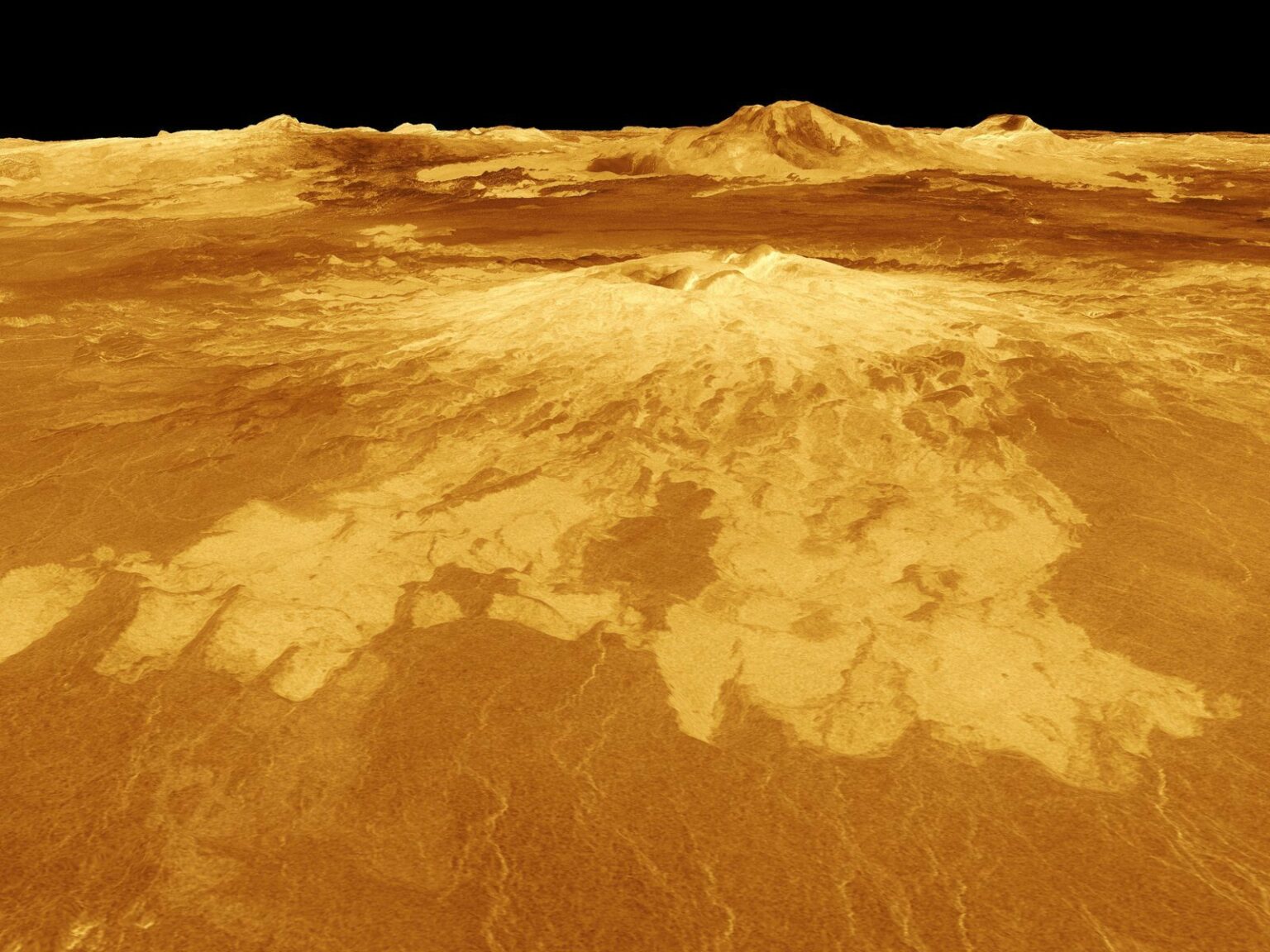
Image above: Venus surface from www.smithsonianmag.com
Source article: NASA publication summarised on Spacepage.com
In our course, we pay a lot of attention to the system of plate tectonics on Earth, because this process has a very important role in the habitability of our planet. On Venus, as far as we know, there is no plate tectonics at all. Therefore, you might expect the crust to keep growing, and crustal rocks not to be recycled into the mantle. A new study by NASA now explains this in more detail.
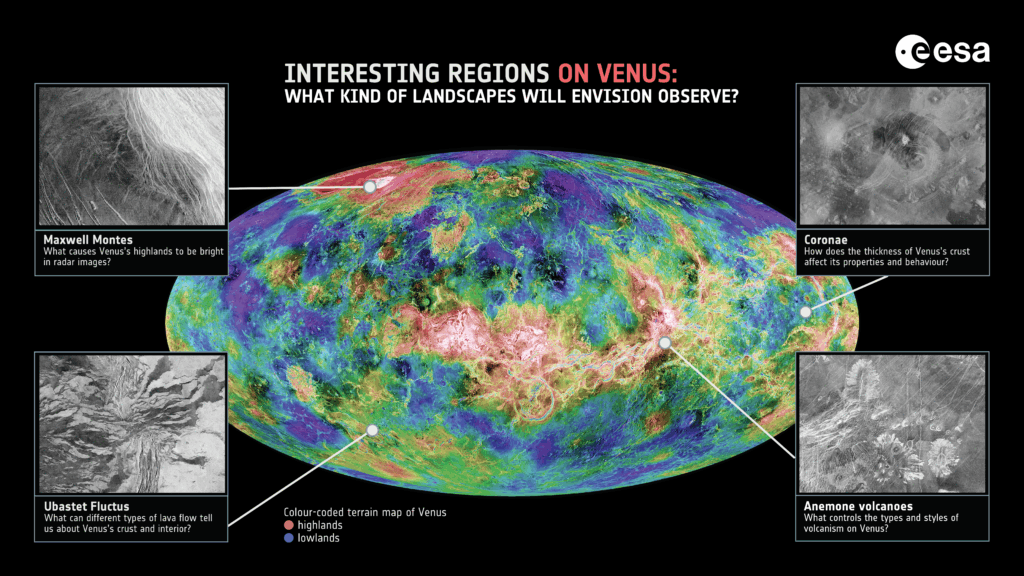
From this study comes an estimate of Venus’ crustal thickness of 40 to 65 km. By comparison, the Earth’s crust is about 10 km thick under the oceans (where everything is recycled back into the mantle), and 35 to 40 km thick under the continents (with peaks up to 80 km thick under mountain ranges). How did Venus’ crust manage to stay relatively thin? NASA now claims to better understand the mechanism. The crust gets thicker and thicker, until it is so dense that it can break off at the bottom or melt off into the mantle. In this way, elements from the crust get back into the mantle in the very long term, which could cause more volcanism. Much additional research is of course needed – preferably on the Venus surface itself – to confirm and further refine these mechanisms.